Some links on this page are affiliate links. We may earn a commission if you book through them, at no extra cost to you.
The short version
I get asked the question every week: when is the right time to book a glacier trip in Iceland. The honest answer is that Iceland does not really have seasons the way other places do. It has two practical windows, summer for glacier hikes and lagoon boats, winter for blue ice caves, and a couple of useful shoulders in between.
Summer (mid-June through mid-August) is the reliable window for a glacier hike on Sólheimajökull or a tongue of Vatnajökull. The ice is walkable, daylight is long enough to recover from bad weather, and every south coast operator is running. Winter (November through March) is the other window, and only for one product, the natural blue ice caves under Vatnajökull. Spring and autumn are transitional, which is a way of saying the weather decides more than you do.
If you only have one week and you want the most reliable experience, mid-June to mid-August. If you specifically want the blue ice cave, January or February. Everything else on this page is the month-by-month detail so you can match the trip to the dates you already have.
How to read this page
I have broken the year into four practical brackets, not four textbook seasons, because Iceland's tourism calendar does not follow the equinox. Each bracket covers daylight hours, typical weather, ice conditions, and which tours actually run. Use it to pick dates first, then book a tour that runs in those dates, not the other way around.
Summer: mid-June to mid-August
The window most visitors plan around
Nineteen to twenty-one hours of daylight. Temperatures at sea level on the south coast between 8°C and 14°C. Rain is possible any week, sometimes three or four days in a row, and on the glacier it feels ten degrees colder than the valley.
Sólheimajökull runs glacier walks on ice the entire summer. Vatnajökull outlet glaciers near Skaftafell also run daily in this window. Jökulsárlón lagoon operates both amphibian boats and zodiac boats, with zodiacs generally starting in early June and running through September.
What runs in summer
- Glacier hikes: Sólheimajökull, Falljökull, and Vatnajökull outlet glaciers at Skaftafell.
- Lagoon boats: Jökulsárlón amphibian and zodiac tours operate daily, with morning slots more reliable than afternoon.
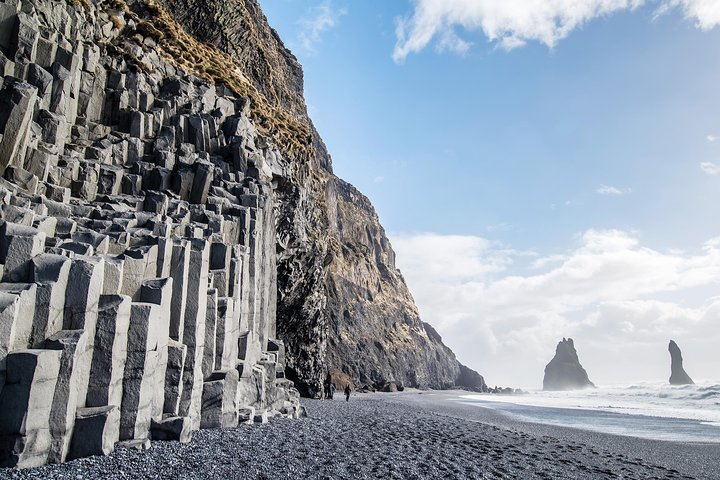
- South Coast combination tours: the standard day from Reykjavik covering Skógafoss, Seljalandsfoss, Reynisfjara black sand beach, and either a glacier walk or a glacier viewpoint.
- Helicopter glacier landings: available from late June through August, weather permitting.
What does not run in summer
Natural blue ice caves. The Katla Ice Cave under Mýrdalsjökull is the one year-round cave option if you want to stand inside a glacier during summer months. Sólheimajökull also has a man-made ice tunnel and a crevasse experience that operates when the weather is reasonable.
Shoulder seasons: May, September, early October
The weeks most Icelanders think run secretly
May and September are the months I send friends who want glacier and south coast without the queues. Daylight is 13 to 16 hours, weather is more variable than summer but rarely dangerous, and the operators have breathing room on group size.
May is the ramping-up month. South coast tours start full operation in early May after the winter operators have wound down. Glacier conditions on Sólheimajökull are good. Ice cave tours are mostly closed. The first Jökulsárlón boat tours of the year start in May, weather permitting.
September is the ramping-down month, in a good way. Crowds drop noticeably from the August peak. Daylight fades from 14 hours to 12 hours through the month. Some operators run reduced schedules or close for maintenance in late September, so confirm before booking if you are traveling in the last week.
The honest trade
Prices are lower, groups are smaller, and the operator guides are usually the senior ones who chose to stay on for the shoulder. The weather cost is real: a rainy week in May looks the same as a rainy week in July, except the daylight is shorter when it clears. Bring the same waterproof shell either way.
Winter: late October through March
The blue ice cave window
Winter in Iceland is short days, long twilight, and the only time of year the natural blue ice caves under Vatnajökull are safe to enter. Guides scout new caves each autumn. Some years the best cave is reachable from the road, some years it is a 30-minute walk across the glacier moraine to reach. The season generally runs from November into March, with the deepest blue saturation in January and February.
Daylight bottoms out at about 4 to 5 hours in late December. Tours are scheduled around the light, so most operators run morning or midday departures. Temperatures on the south coast hover around freezing, with windchill on the glacier the limiting factor more than the thermometer.
What runs in winter
- Blue ice cave tours: Vatnajökull, meeting points vary by operator and by which cave is currently accessible.
- Glacier hikes: Sólheimajökull and certain Vatnajökull outlets run year round, with smaller group sizes in winter.
- South Coast combination tours: reduced frequency, often 2 to 3 departures per week, weather dependent.
- Northern Lights: chasing aurora is a side product, not a glacier product, but worth knowing it overlaps with cave season.
What does not run in winter
Jökulsárlón lagoon boats close in late October or November and reopen in May. The Ring Road in winter has frequent closures between Vík and Höfn, and many east-coast tours cancel on short notice when storms close road 1.
Spring and late autumn: April, late October, November
The transitional months
April is the end of one season and the lead-in to the next. Daylight stretches from 11 hours at the start of the month to 17 hours by the end. Ice cave tours are mostly closed as the caves begin to melt from the inside, and some operators pull cave tours forward into early March and stop offering them by mid-April.
Late October and November are the mirror image. The first winter snow arrives on Vatnajökull. Ice cave tours begin opening in mid to late October as new caves stabilize. By mid-November most operators have a current cave in production. December is fully operational but the cave ceilings are still forming and access is sometimes limited.
These three months are when I would not book far in advance. Conditions change weekly. Operators that promise a tour in April or late October are guessing, and a good operator will refund or move your day if the ice says no.
Month by month, at a glance
| Month |
Daylight |
Glacier hike |
Blue ice cave |
Lagoon boat |
| January | 5–7 hrs | Yes, small groups | Peak season | Closed |
| February | 8–10 hrs | Yes, small groups | Peak season | Closed |
| March | 11–14 hrs | Yes | Closing, week-of | Closed |
| April | 14–17 hrs | Yes | Mostly closed | Closed |
| May | 17–19 hrs | Yes, shoulder | Closed | Starting |
| June | 19–21 hrs | Yes, full schedule | Closed | Daily |
| July | 19–21 hrs | Yes, peak | Closed | Daily |
| August | 15–19 hrs | Yes, peak | Closed | Daily |
| September | 12–15 hrs | Yes, shoulder | Closed | Ending |
| October | 9–12 hrs | Yes | Opening, week-of | Closed |
| November | 6–9 hrs | Yes, small groups | Yes | Closed |
| December | 4–5 hrs | Yes, small groups | Yes | Closed |
Decision rules I use on the mountain
- One week, first time, want it to just work: mid-June to mid-August. Book the most-booked day, the south coast + glacier hike combination from Reykjavik.
- Want the blue ice, can handle short days and cold: late January or early February. The caves are at peak saturation and the morning tours are less crowded than the December peak.
- Flexible dates, want shoulder value: the second week of September. Crowds are down, the operators are senior, and the light is still good enough for a full day on the ice.
- Want the boat among icebergs: early July. Lagoon boats run daily in summer, and the morning zodiac slot has the calmest water.
- Already in Iceland, weather turns bad: keep the booking and dress for worse than forecast. The Iceland forecast is unreliable past 48 hours. Build a buffer day into your trip.
Variables that change the answer
A few things move the right month around, and they are worth checking before you book.
Volcanic activity. An active eruption on the Reykjanes peninsula or near Mýrdalsjökull can close roads and cancel tours with short notice. The Icelandic Meteorological Office (vedur.is) and the Department of Civil Protection post updates.
Road conditions. The south coast road (Route 1) stays open year round except in extreme storms. Inland routes close in winter. Any tour east of Skaftafell in January or February carries a real cancellation risk for road rather than weather reasons.
Cave status. Natural blue ice caves form every autumn and collapse every spring. The cave that exists in February did not exist in November and will not exist in April. Operators rebook or refund when their cave closes.
Day of the week. Most south coast day tours operate daily in summer. Mid-week is quieter. Lagoon boat tours run daily in summer and most shoulder months, weather permitting.
Time of day. Morning departures (8 to 10 AM) have smaller groups, better light, and lower wind on the lagoon. Afternoon departures are warmer but busier.
The single best week of the year
If I had to pick one week for a first-time visitor who wants a glacier hike and is open on dates, it would be the second week of July. It is past the spring cold snap, before the autumn weather shifts, in the longest daylight window, with tour operators in full operation and guide schedules stable. Cost is at peak, service is too. The trade is crowds.
If I had flexibility on dates and could swap to a quieter shoulder week, the second week of September is my pick. Smaller groups, the same ice conditions, and the light is shifting enough that the photos look different from the July ones.
If I specifically wanted the blue ice cave and could handle the cold, the last week of January. The deepest blue saturation of the year, fewer cave crowds than December, and the morning tours still have enough light to climb back off the glacier without headlamps.
What to wear and bring
Layered clothing: a merino or synthetic base, a fleece or insulated mid-layer, and a waterproof shell. Waterproof hiking boots with grippy soles are required for any glacier tour. Waterproof gloves, a beanie, and sunglasses with good UV protection complete the kit. The operator provides helmet, crampons, and ice axe. Check the full kit list on the What to Wear on a Glacier Tour page before you pack.
Browse tours by season
Three tours I would put in front of a friend, matched to the seasons above. Prices and availability are set by Viator; click through for live booking.
Summer glacier hike
Glacier Hike and South Coast Small-Group Tour from Reykjavik
Affiliate disclosure: this page contains Viator affiliate links (PID=P00299531). Bookings and cancellations are handled by Viator.
Sólheimajökull glacier walk with full safety gear, plus the south coast waterfalls and Reynisfjara black sand beach. The most-booked combination day for a reason. Runs mid-June through mid-August at full schedule; reduced frequency in shoulder months.
From US$199
Check availability →
External booking on Viator · pricing and cancellations handled by Viator

Year-round south coast day
Iceland South Coast Full Day Small-Group Tour from Reykjavik
Seljalandsfoss, Skógafoss, Reynisfjara, and a glacier viewpoint stop. Runs in every season that the road is open, so this is the booking if your dates are fixed and you want a guaranteed glacier-adjacent day even in April or November.
From US$134
Check availability →
External booking on Viator · pricing and cancellations handled by Viator

Summer glacier & black sand
South Iceland Glacier and Black Sand Beach Small Group Tour
Compact south coast day built around the glacier and the black sand beach, with fewer stops than the longer combination tours. A good fit if you want the glacier and the coast without a 12-hour day in the vehicle.
From US$155
Check availability →
External booking on Viator · pricing and cancellations handled by Viator
Explore more
Seasonal references worth bookmarking before you book: